Built by engineers who pivoted to grid forecasting from production ML.
Eight years catching invisible defects on a manufacturing line at Qualcomm. The same problem shape, applied to demand forecasting on a grid that can't directly see behind-the-meter generation.
At a glance
A CEC solicitation on behind-the-meter load became a tractable problem.
Gramm builds software that predicts how much electricity U.S. power grids will need. Better predictions make keeping the lights on cheaper, and lower costs flow back to the people who pay utility bills.
In late 2025 Rex started reading into net-load forecasting: how grid operators separate visible aggregate demand from invisible behind-the-meter generation. Attribution of an observable aggregate to unobservable upstream components is a problem Rex had worked on for 8 years at Qualcomm in a different domain: production-line defect analysis in compact camera modules. Different physics, same inverse-problem shape.
He and Sunki ran an architecture originally built for that manufacturing work against two years of CAISO load, then ERCOT, then the remaining grids. In retrospective holdout testing the state-space model outperformed each ISO’s published day-ahead baseline; the tail-behavior follow-up became a second paper. Both preprints are on arXiv, the benchmarking study and the tail-risk evaluation framework. Gramm AI was incorporated in Delaware in early 2026, and the API launched with all seven grids and the ISO baselines published next to the Gramm numbers. The long-horizon climate pipeline feeding CAISO scenarios uses WRF and LOCA2-Hybrid downscaling from Cal-Adapt.
By the numbers
8
years in production ML at Qualcomm
2
founding arXiv papers
Aug–Apr
held-out evaluation window per grid
2026
Delaware incorporation
Experience across ML, semiconductors, and energy systems.
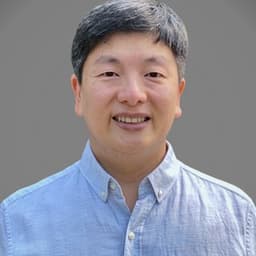
Rex Lee, Ph.D.
CEO
Started Gramm after publishing two papers on whether deep learning could improve U.S. grid forecasting. Spent 8 years at Qualcomm building inspection systems for compact camera module production lines. Believes the best forecasts should be publicly verifiable, not hidden behind NDAs.
LinkedIn
David Yoon
Chief Strategy Officer
Ran global manufacturing operations at Samsung for over two decades. Joined Gramm because energy infrastructure has the same scaling problems he solved in semiconductors, and most of them start with better forecasting.
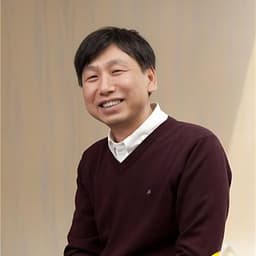
S.C. Hong
Chief Technology Officer
Built and sold a precision measurement company. Co-authored both of Gramm's founding papers. Obsessed with the gap between what models can do in a notebook and what they actually do in production.
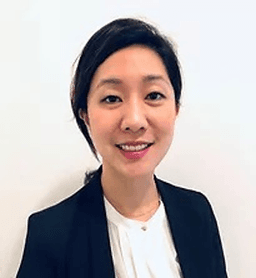
Jennifer Lee, J.D.
Licensing & Compliance
Handles the parts that make ML companies stumble, licensing, IP, and the regulatory side of selling into energy markets. Keeps us compliant so the engineers can focus on forecasts.
Two arXiv preprints.
One benchmarks deep learning architectures across U.S. grids. One introduces safety-focused evaluation metrics for grid load forecasting.
Benchmarking Deep Learning Architectures for US Grid Demand Forecasting
Hong, S. and Lee, R.
Benchmark study comparing modern deep learning architectures for electricity demand forecasting across major U.S. grids. The paper shows how weather covariates change performance rankings and provides the public research basis for Gramm's evaluation framework.
Reliable Grid Forecasting: State Space Models for Safety-Critical Energy Systems
Hong, S. and Lee, R.
Introduces evaluation metrics focused on under-prediction risk for grid load forecasting. Benchmarks five neural architectures, including state space models and Transformers, on 24 months of California grid data. Shows that models with similar MAPE can have vastly different operational safety profiles, and proposes bias-controlled objectives to balance tail-risk minimization with preventing systematic over-forecasting.
Read more on the Research page →